


Listen here for the press conference with Eduardo Verastegui before his appearance at Eastern CT State University in Willimantic on August 11. Here are some photos of the event, including one with my daughter Gabbi.

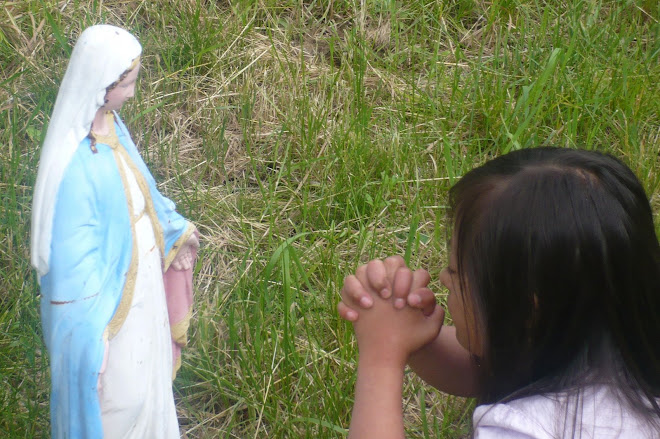
Dedicated to the Blessed Virgin Mary, the Cause of Our Joy, and my three daughters, the cause of my joy.
 Children trapped in a terrifying world of air raids, and night time bombings, caught between clashing forces beyond their understanding. Shipped off to remote places in the country, with forbidding, invisible hosts. This is the prelude to their entry into a fantasy world called Narnia.
In the end, Lewis’s omnipotent lion does come to life in grand fashion on the
screen — along with much of the book’s religious meaning (though not all; for
more, see full review, coming soon). It’s also worth noting that, in spite of
all the reluctance to talk religion, the religious importance of the stories
hasn’t been lost on Disney, which hired Motive Movie Marketing to run the same
kind of grass-roots outreach to faith-based groups that proved so successful
with The Passion. Promotional events at churches have coached pastors and
leaders on using the film to do outreach in their communities.
After years of chilly relationships between Hollywood generally — and Disney in particular — and certain segments of American Christendom, LWW could represent at least a partial thawing. For Christians who’ve felt for years that Hollywood wasn’t
willing to acknowledge their existence, Disney’s church-based overtures may be a
welcome sign of change. For their part, Disney executives must surely be
delighted to have a film, or even a franchise, with the potential to bring in
even viewers previously determined to avoid anything with a Disney logo.
At the same time, religious considerations have to matter to Hollywood not just in
the marketing process, but in the creative process. Filmmakers don’t need to
share the religious views of a Lewis or a Tolkien to adapt their works, but they
do need to be willing to try to understand and honor the relationship of those
views to the work. If that ever caught on, the thaw might become a springtime.
I'll be forever grateful to my parents, authors both, for teaching me to read.
Not how to read, just to read. In a simpler time, before the Internet,
before the electronic video games, before cable, before iPods, this was not
the challenge it is today. We lived in the country with rabbit-eared
television sets with access to less than a handful of stations, half of
which crackled with snow, and it really didn't matter anyway because we were
allowed only two hours' viewing per week -- so we read. Hollywood is in the business of entertainment. It has befuddled me forever why this industry, which in a bygone era registered extraordinary financial success simply by putting great literature on the silver screen, all but abandoned that formula in the past 40 to 50 years in favor of, well, junk. I'm looking at today's movie listings in my nearby multiplex: "Norbit," "Hannibal Rising," "The Messengers," "Epic Movie" and "Daddy's Little Girl." If any of these are books, they would be the kinds of books the Bozell children were notallowed to read.
Then along came Walden Media in 2000, and in seven short years this new studio has taken Hollywood by storm with its commitment to retelling great literature, especially the most popular and well-loved children's literature. The visionary behind Walden is business tycoon Philip Anschutz. A deeply private man, Anschutz hasn't given a press interview in 30 years, but you just have to like how he summed up before a Christian school audience in 2004 his decision to enter the gates of Hollywood: "I decided to stop cursing the darkness." Rather than
complaining how Hollywood isn't making good movies, he decided to make them
himself. As Walden President Mike Flaherty points out, "We have a
paradoxical mission statement, which is to use films to get kids reading." While
many parents think movies and television are replacing the printed word, Walden
is employing the delight of visual media to create delight in great stories
between bound covers. Walden is most serious about this task. The studio
is in contact with more than 100,000 teachers and librarians every year,
always looking for what Flaherty calls "the canon of literature that
everybody has read." C.S. Lewis, meet Hollywood. "The Lion, the Witch, and he Wardrobe," the first of the Narnia series, was a blockbuster success, grossing over $750 million, and two sequels now are in production. Charlotte's Web" was another
commercial success. The newest Walden movie, "The Bridge to Terabithia," won the
Newbery Medal as the best children's book of 1977. Flaherty cites how Lewis
talked about the paradox that "great fantasy heightens the readers' sense of
reality and responsibility." J.R.R. Tolkien said the same about his "Lord of the
Rings" trilogy. Heroes give children a more heroic imagination and worldview, a
joy "beyond the walls of the world."

